
A stop-work notice remains the operative public action against Adani Green Energy's 1,500 MW Tarali pumped-storage project, while Maharashtra considers the company's explanation of two sharply different cost figures. The forest department ordered construction halted on 13 November over the absence of National Board for Wildlife approval. Following a 17 November meeting with forest minister Ganesh Naik, officials said a decision on whether to withdraw that instruction was still pending. The distinction matters: a ministerial review is not a restored permission to build. 1 2 3
The immediate question is how to reconcile the project's estimated ₹5,675 crore capital expenditure with ₹56.75 crore appearing in a later application. Indian Express reporting on documents associated with the project had raised the possibility that using the smaller base would reduce a wildlife-conservation contribution from ₹227 crore to ₹2.27 crore. Those are arithmetic consequences of applying the reported four-percent rate to the two figures, not evidence that the smaller amount has been finally accepted or that conservation dues have been lawfully waived. 4
At Tuesday's meeting, according to Indian Express and independently reported comments to Hindustan Times, representatives of Adani Green said the ₹56.75 crore number concerned only initial surveys, geological investigations and engineering studies. They described ₹5,675 crore as the overall project capital cost. The forest minister instructed compliance with the appropriate obligations for each proposal, officials said. That explanation addresses why two figures might exist but does not, by itself, decide which project cost the relevant conservation payment must legally follow. 1 2
The approval dispute is separate from the accounting dispute. A 13 November forest-department notice, which Hindustan Times says it obtained and examined, directed activities at the site to stop and sought records of National Board for Wildlife permission and tree-felling approvals. The notice described work beginning without the required wildlife authorisation. A show-cause process and an instruction to stop are administrative steps; they are not a judicial determination of wrongdoing. Whether work actually ceased at every location has not been independently established by the documents available for this report. 5
The company disputes the suggestion that it began construction without applicable permissions. In its 16 November account, reported by India Today and Indian Express, Adani Green said no project component lies inside a notified protected area and no forest land is used. It cited a no-forest-land certificate dated 23 January 2024, environmental clearance dated 11 February 2025 and state pollution-board consent dated 7 April 2025. It also acknowledged that a wildlife-clearance proposal was still under consideration. An environmental clearance or consent to establish does not automatically resolve every other approval requirement alleged by the forest department. 6 7
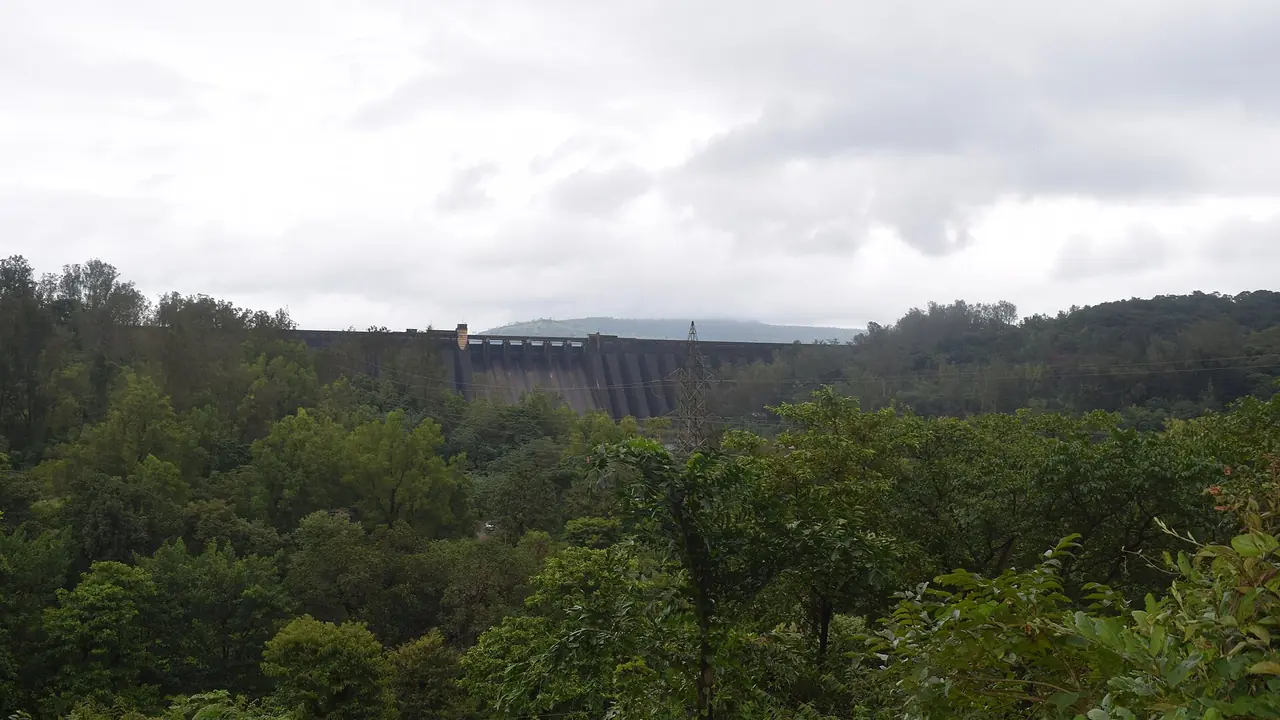
Tarali is more than a small local building-permit dispute. The planned hydroelectric storage system has a stated capacity of 1,500 MW and would use the existing Tarali reservoir alongside new water-storage infrastructure. Pumped-storage facilities draw electricity to move water uphill and later release it to generate power, helping balance a grid increasingly dependent on variable solar and wind output. The question is not whether energy storage is valuable in principle but whether a nationally significant developer can proceed while regulators examine conservation conditions. 8
Hindustan Times reported on 18 November that officials anticipated the possibility of withdrawing the stop-work order after reviewing the company's submission. Deputy conservator Amol Satpute said the documents remained under scrutiny and that further details would follow completion of the procedure. That forecast should not be mistaken for a revocation. The next verifiable milestones are a written state decision on the halt, a determination of the applicable wildlife-conservation payment, and the status of National Board for Wildlife approval. Until these are issued, neither a clean regulatory clearance nor a proven attempt to evade dues can responsibly be asserted. 2