
Israel's October 27 parliamentary election has left Prime Minister Benjamin Netanyahu without the majority that sustained his governing coalition, bringing a period of political uncertainty to a country confronting the consequences of years of regional conflict and internal division. The result is a significant setback for Israel's longest-serving prime minister, who has held office for approximately 19 years across three periods since 1996. Yet it is not an outright electoral victory for his principal challenger, former military chief Gadi Eisenkot. Netanyahu's Likud remains the largest individual party in the Knesset, while Eisenkot's opposition alliance falls short of a majority of its own. The immediate question is therefore not simply who won more votes, but who can assemble a government from an unusually fragmented parliament. As of November 6, Netanyahu remains prime minister in a caretaker capacity, President Isaac Herzog has not assigned the task of forming the next government, and the political parties are negotiating arrangements that would require compromises on some of their most important electoral commitments. ¹
The official results, delivered to Herzog on November 4, establish the parliamentary arithmetic. Likud secured 27 of the Knesset's 120 seats with approximately 20.5% of valid votes, while Eisenkot's newly established Yashar party won 21 seats with 16.1%. Former prime minister Naftali Bennett's Be'Yachad alliance finished third with 12 seats. The Joint List, representing predominantly Arab voters, secured 11, followed by the Democrats and Ra'am with eight seats each. Avigdor Liberman's Yisrael Beytenu, United Torah Judaism and Itamar Ben-Gvir's Otzma Yehudit each won seven seats, while Shas and the Religious Zionism–Zehut alliance secured six apiece. These results left Netanyahu's established religious-nationalist bloc with 53 seats, four Jewish-led opposition parties with 48, and the two Arab-led parties with a combined 19. The minimum requirement for an absolute parliamentary majority is 61 seats. Neither of the two principal governing blocs reached that number independently. ²
Participation was unusually high. Israel's Central Elections Committee recorded approximately 5.69 million valid votes from more than 7.33 million registered voters, with total turnout reported at nearly 78%, substantially above the 70.6% recorded in the 2022 election. The Joint List and Ra'am together secured 19 seats, a record level of representation for Arab-led parties in this election. Their combined strength gives lawmakers representing Israel's Palestinian-Arab minority an important role in the government-formation process, although parliamentary influence does not automatically translate into participation in a governing coalition. Israel's electoral system allocates seats through nationwide proportional representation, with parties required to cross a 3.25% electoral threshold. Because voters elect party lists rather than a prime minister directly, the largest individual party does not necessarily produce the next government. The election instead determines the balance of parliamentary representation from which negotiations begin. ² ³
For Netanyahu, the distinction is central. His coalition lost the ability to command an outright majority, but Likud's 27 seats mean he remains the leader of the largest political faction. The result reflects both his continuing electoral strength and the limits of his existing alliances. Netanyahu entered the election defending his government's record during the period following the Hamas-led October 7, 2023 attacks and Israel's subsequent wars in Gaza, Lebanon and Iran. His leadership has been subject to criticism over security failures, the humanitarian consequences of military operations, disputes concerning the judiciary and questions of political accountability. Supporters, meanwhile, have emphasised Israel's security threats, military capabilities and the government's approach to regional adversaries. The vote did not produce a uniform rejection or endorsement of those positions. Instead, it divided representation among competing parties and left both major camps dependent on negotiations with groups whose priorities do not always align. ⁴
Eisenkot and the limits of the opposition victory
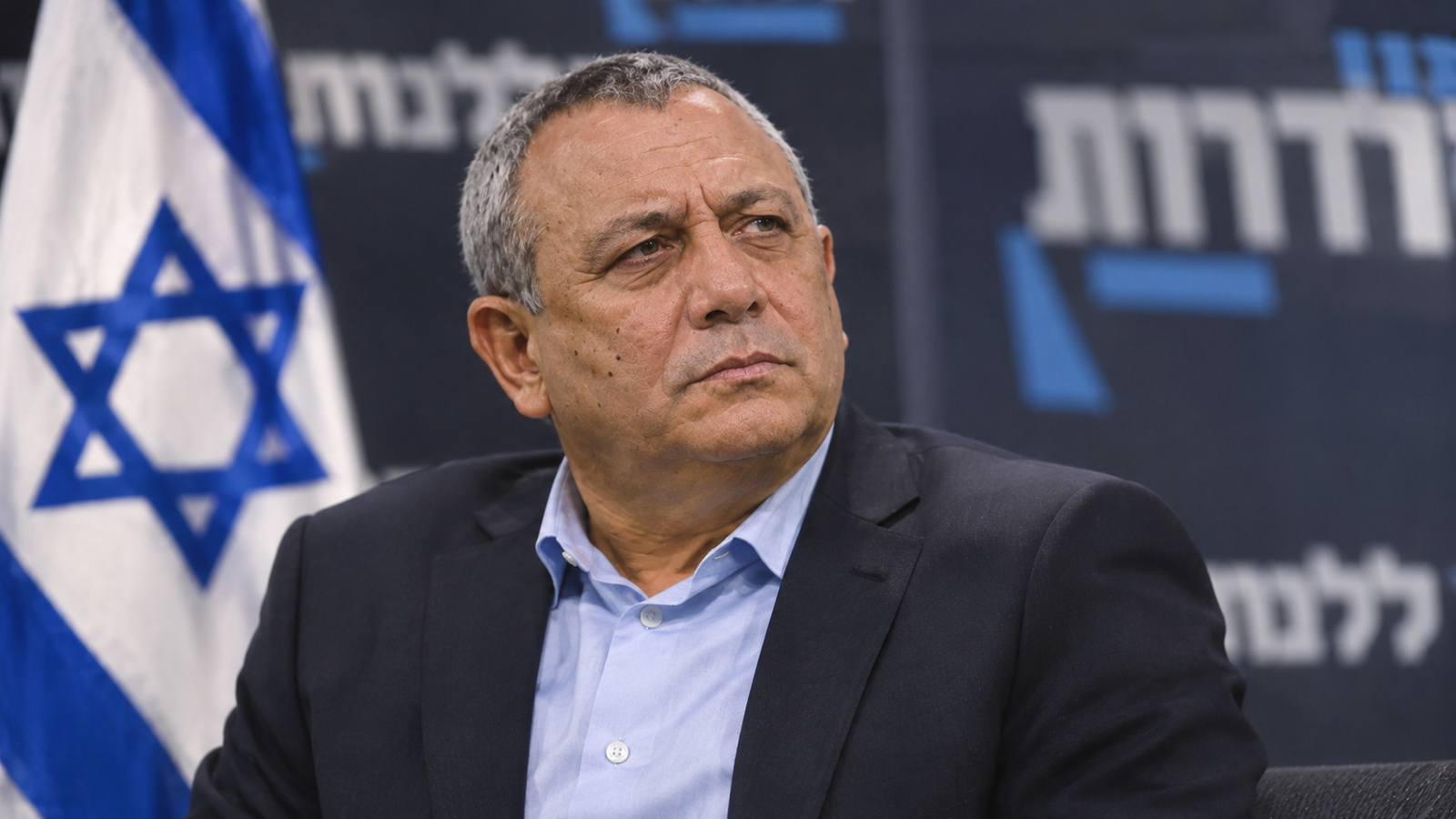
Gadi Eisenkot has emerged as the central figure in the attempt to establish an alternative government. The 66-year-old former chief of staff of the Israel Defense Forces served as the country's senior military commander from 2015 to 2019, after a long career that included command responsibilities in northern Israel. Following the October 2023 attacks, he joined Netanyahu's emergency wartime administration alongside Benny Gantz, before leaving the government in June 2024 amid disagreements about its strategy. Eisenkot subsequently separated from Gantz's political organisation and established Yashar, presenting himself as a candidate combining military experience with a commitment to institutional reform. His personal history also includes the death of his son, Gal, during military operations in Gaza in December 2023. These experiences have contributed to his public profile, but they should not obscure that his political programme contains substantive commitments extending beyond criticism of Netanyahu. ⁵
Yashar's published objectives include strengthening Israeli security, introducing a framework of military or national service for all citizens under applicable law, preserving the country's Jewish and democratic character, and developing constitutional arrangements that would define the relationship between parliament, government and the judiciary. The party also advocates investment in public education and measures intended to reduce social inequalities. These commitments help explain how Eisenkot has appealed to voters concerned about institutional governance without presenting himself as a radical departure from Israel's established security outlook. He has supported a forceful military response to hostile armed groups and, like Netanyahu, opposes the immediate establishment of an independent Palestinian state under current conditions. The differences between the two leaders are consequently more substantial on questions of governance, political alliances and some aspects of territorial policy than on every major national-security question. ⁶ ⁷
Eisenkot's strongest post-election development came during the presidential consultations on November 5. Herzog announced that representatives of factions holding 67 Knesset seats had recommended Eisenkot to form the next government, compared with 46 who recommended Netanyahu. The numbers placed Eisenkot ahead in the process of securing parliamentary endorsements, but Herzog cautioned that the apparent advantage did not settle who could actually form a government. In his official statement, the president referred to “mutual vetoes between the blocs and within the blocs themselves,” acknowledging that parties recommending a particular candidate may remain unwilling to participate in the government that candidate proposes. He announced his intention to assign the mandate on Sunday, November 8, after additional discussions with party leaders. The endorsement figures therefore describe the presidential consultations, not a successful vote of confidence in an established coalition. ⁸
The difference between 67 endorsements and 48 seats in Eisenkot's core opposition bloc is explained by the Arab-led parties. Ra'am, which holds eight seats, and the Joint List, which holds 11, both supported giving Eisenkot the opportunity to form a government. Together with the 48 seats held by the four Jewish-led opposition parties, that produced the 67 recommendations reported by the president. Yet an endorsement during consultations does not oblige either Arab-led faction to join a future coalition, support its legislative agenda or vote for every government proposal. Equally important, Eisenkot and some of his prospective partners have previously ruled out governing through formal partnerships with Arab-led parties. The parliamentary arithmetic creates an opportunity, but the political commitments made during the campaign complicate its use. ¹
One possibility discussed in Israel is a minority government sustained by outside parliamentary support. Under such an arrangement, a coalition with fewer than 61 members could take office if it receives more votes in favour than against during the relevant confidence vote. Arab-led parties might support or abstain without necessarily taking cabinet positions. But the proposal faces opposition from politicians who have promised not to depend on those factions. Liberman, whose Yisrael Beytenu holds seven seats, has been particularly resistant to such an arrangement. Bennett also faces questions about whether he would abandon positions taken during the election campaign. Their reservations are not merely procedural. Differences over national identity, security, military service and relations with Palestinian political representatives could make it difficult to maintain an administration even if its initial formation became possible. A government capable of surviving its first confidence vote would still need to approve budgets and other legislation. ⁹
A second route involves the ultra-Orthodox parties, whose relationship with Netanyahu has become increasingly complicated. United Torah Judaism, a longstanding component of the prime minister's political alliances, declined to recommend either candidate during the presidential consultations. The decision reduced Netanyahu's endorsements to 46 despite the 53 seats associated with his wider electoral bloc. Disagreement over exemptions from compulsory military service for ultra-Orthodox men has been central to the tension. Some opposition figures have explored the possibility that abstentions or cooperation from ultra-Orthodox lawmakers could permit an alternative government to take office without dependence on all 19 Arab-led seats. But concessions sufficient to secure such cooperation could conflict directly with Eisenkot's promise to expand service obligations. The arithmetic that could make an arrangement possible might simultaneously undermine the policy agreement required to sustain it. ¹ ¹⁰
The dispute over the result and the government-formation process
The election's aftermath has also produced a dispute over the legitimacy of the count. Netanyahu and political allies have raised allegations concerning possible interference and irregularities associated with votes for Arab-led parties. Israel's Central Elections Committee reviewed claims concerning the election and stated on November 4 that it had found no evidence of irregularities affecting the result or undermining its integrity. A separate security investigation into suspected foreign interference remained under examination, but the existence of that inquiry did not establish that the election outcome had been altered. The committee's chairman, Supreme Court Justice Noam Sohlberg, warned about the damage that unfounded claims could do to public trust. Herzog accepted the certified results as legally binding and called for political leaders to respect the outcome. These developments distinguish a legitimate investigation of specific allegations from a substantiated finding that the election was compromised. ¹¹
The institutional process now turns on Herzog's decision. Under Israel's Basic Law governing the formation of governments, the president consults parliamentary factions before assigning the task to a member of the Knesset who agrees to undertake it. The designated candidate initially receives 28 days to assemble a government, with the possibility of extensions totalling another 14 days. If that attempt fails, the president can ask another lawmaker to try, while subsequent procedures allow parliamentarians to initiate a further attempt under specified conditions. Only after the relevant opportunities are exhausted does the process lead towards another election. The legal framework therefore does not establish that a failed first attempt by Eisenkot would automatically return Netanyahu to power, or that Netanyahu must immediately leave office because his alliance lost its majority. The outgoing government continues performing its functions until a successor takes office. ¹²
These procedures matter because the central challenge is political agreement rather than the absence of a legal mechanism. Netanyahu could seek additional support from parties outside his previous coalition, while Eisenkot could attempt to reconcile opposition factions or obtain sufficient abstentions to pass a confidence vote. The parties might also consider broader arrangements that are not currently reflected in their public commitments. None of these possibilities is guaranteed, and the official results do not identify a single governing combination that has secured the necessary agreement. The country's recent experience of repeated elections adds further significance to the negotiations, since an unresolved deadlock would impose another period of political uncertainty. The decisive development will be an agreement capable of securing parliamentary confidence, rather than a claim of victory based exclusively on seats or recommendations.
How Iran reacted: indifference in public, uncertainty in private
Iran's government publicly dismissed the significance of the Israeli election even before Netanyahu lost his parliamentary majority. Speaking at a regular Foreign Ministry briefing in Tehran on October 26, one day before voting, spokesman Esmaeil Baghaei said the result would make “no difference” to the Islamic Republic, arguing that competing Israeli leaders shared responsibility for policies Tehran regarded as hostile to the region. Baghaei also dismissed Netanyahu's recent threats against Iran's leadership as expressions of desperation. His remarks established the government's public position: a change in Israeli leadership would not, by itself, remove the security confrontation between the two countries. Importantly, the statement preceded the election and should not be mistaken for a fresh official response to Netanyahu's subsequent loss of his coalition majority. ¹³ ¹⁴
Iranian news organisations nevertheless examined the result closely. Reports by Tasnim and Fars, both associated with the Islamic Revolutionary Guard Corps, and Iranian state broadcasters concentrated on Netanyahu's weakened position, the failure of both major Israeli blocs to secure a majority and the increased parliamentary representation of Arab-led parties. The conservative newspaper Khorasan argued that Netanyahu's possible departure could benefit Iran by weakening the diplomatic relationships and political influence he had accumulated during years of confrontation, even if his successor maintained similar policies towards Tehran. Other commentators were less persuaded that a change of prime minister would meaningfully reduce military risks. Analysts quoted in Iranian media argued that Eisenkot's background as a former military chief and his positions on Iran's nuclear and missile programmes suggested considerable continuity in Israeli security policy. These were assessments by newspapers and commentators, not a collective declaration by Iran's leadership. ¹⁵
The distinction between Netanyahu and Eisenkot has also generated disagreement over the possibility of renewed hostilities. Some Iranian commentators have suggested that replacing Netanyahu could weaken the political momentum behind another confrontation, particularly because Eisenkot has questioned aspects of the prime minister's military objectives. Others have warned that an unresolved coalition process might create additional uncertainty, potentially allowing Netanyahu greater freedom to pursue military action while remaining in office. International affairs analyst Morteza Makki, speaking to the Iranian Labour News Agency, raised the possibility that a delayed transition could provide an opportunity for escalation. These interpretations remain speculative, and no election result alone can determine whether either government would initiate or avoid further fighting. The more consistent conclusion across Iranian reporting is that Tehran sees the rivalry with Israel as extending beyond any single prime minister. ¹⁵ ¹⁶
For Israel's international relationships, the election also raises questions that cannot be answered by substituting one political leader's name for another. An Eisenkot government would probably present a different approach to some institutional and diplomatic issues, particularly if its coalition depended on parties outside Netanyahu's nationalist alliance. Yet Eisenkot is a former senior military commander with firmly established security positions, not a candidate advocating a comprehensive reversal of Israeli military policy. Reuters reported before the election that both Netanyahu and Eisenkot opposed the creation of an independent Palestinian state and shared demanding conditions concerning Hamas in Gaza. Their differences over West Bank settlement policy and the composition of potential governing coalitions could nevertheless produce meaningful differences in practice. Any assessment of a future government's conduct must therefore distinguish stated policies, coalition constraints and actions eventually taken in office. ⁷
The same caution applies to Israel's relations with Washington and neighbouring states. The October election took place after years of conflict involving Gaza, Lebanon and Iran, with the country's security policies carrying consequences far beyond its borders. A prolonged government-formation process may affect the continuity of diplomatic decisions, defence planning and domestic legislation, although the caretaker government remains responsible for ongoing administration. A change in leadership could alter the composition and tone of Israeli diplomacy without necessarily resolving the underlying disputes. Foreign governments consequently have reasons to monitor the outcome of coalition negotiations rather than interpret the election result as proof that Israel's regional policy has already changed.
Netanyahu's political setback is unmistakable in one respect: his previous coalition no longer possesses the parliamentary majority required to govern on its own. Eisenkot has acquired a substantial opening, supported by endorsements from 67 lawmakers and the emergence of a second-largest party commanding 21 seats. But the difference between those figures reveals the central uncertainty of the election. Parliamentary support for replacing a prime minister is not necessarily agreement on who should replace him, what policies a successor should pursue or which parties should sustain the administration. Netanyahu remains in office, Eisenkot has not yet been entrusted with forming a government, and neither side has demonstrated a workable coalition. The election has changed Israel's balance of political power. Whether it produces a change of government will be determined by the negotiations that follow.