
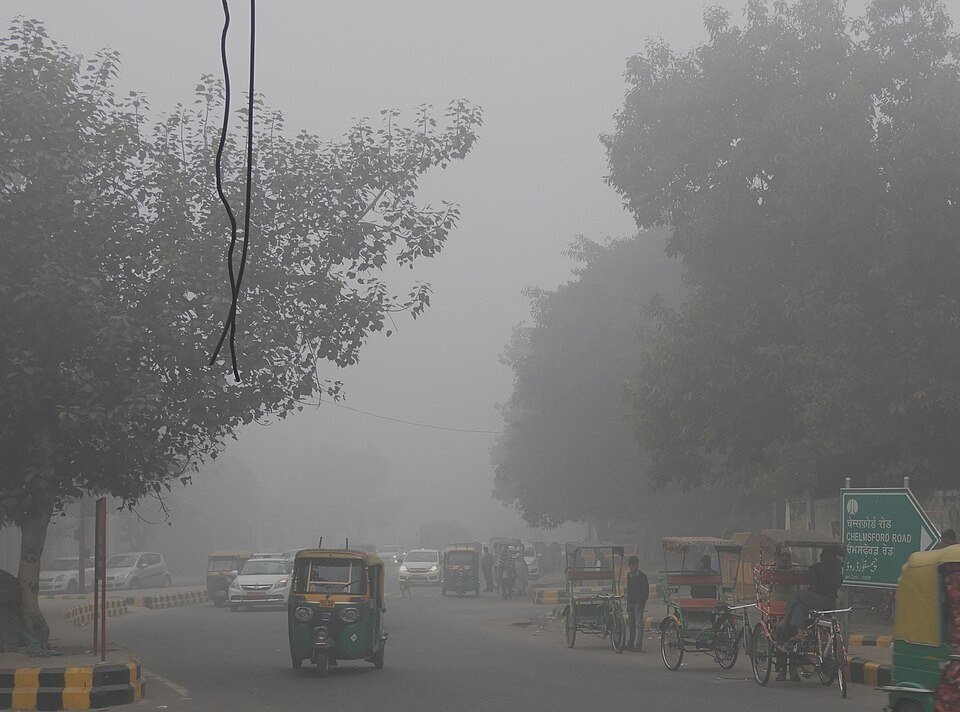
Delhi-NCR ended the third stage of its emergency air-pollution restrictions on 17 November, but it did not lift every construction and workplace measure affecting the region. The Commission for Air Quality Management (CAQM) withdrew GRAP Stage III after air quality improved, while explicitly retaining an earlier order restricting specified demolition and outdoor construction and limiting physical attendance in certain government and private offices. The distinction matters because the continued requirements arise from a separate direction, not from Stage III itself. A contractor or employer who reads the withdrawal as a general all-clear could misinterpret the rules still in force. 1 2 3
The regulator's decision followed several days of improving pollution conditions and forecasts that did not justify keeping Stage III in place. Measures under the first two stages of the Graded Response Action Plan remain operative, according to CAQM's announcement. Stage withdrawal is therefore a change in the level of emergency response, not a statement that air quality has become safe or that all earlier directions have expired. Delhi's winter pollution controls operate through overlapping orders, which makes the date and legal basis of each instruction important. 1 2 3
One instruction has a particularly clear deadline. CAQM said its 30 October order on dust-generating demolition and outdoor construction across the NCR would continue, subject to the exemptions specified in that order. The restriction concerns covered activities, not a universal suspension of all building work. Infrastructure and other expressly exempt projects should be assessed against the original directions rather than assumed to be prohibited or automatically released by the withdrawal of Stage III. Builders need to check the applicable category of work and any local implementation instructions before changing site schedules. 1 2 6
The same 30 October direction also required specified government and private offices in Delhi and adjoining districts to operate with no more than 50% of staff physically attending between 5 and 20 November, subject to its terms and exceptions. That period was not cancelled by the Stage III withdrawal. Employers therefore face two separate dates: the day the emergency stage ended and the previously specified end of the attendance direction. This is not a new permanent work-from-home law, and the exact coverage of an establishment matters more than a broad statement that offices are open again. 1 2 6
Schools illustrate a different consequence of the decision. Delhi's education authorities instructed recognised schools to resume physical classes after the Stage III measures were revoked, according to reporting on 18 November. That step should not be confused with the continuing office and construction directions. Different activities are governed by different measures, and their removal need not occur simultaneously. The practical lesson for schools, employers and contractors is to read the relevant direction itself instead of relying on a single headline about GRAP being lifted. 3 4
The improvement in pollution readings also needs careful interpretation. Delhi's daily average Air Quality Index fell to 204 on Tuesday, 17 November, while Business Standard reported an hourly reading of 214 at 7 a.m. on Wednesday. Those figures refer to different observation periods and should not be treated as contradictory versions of one measurement. Both sit in the 'poor' AQI band, well above conditions that would make pollution controls irrelevant. A lower emergency stage signals changing conditions and forecasts, not that the underlying winter pollution problem is resolved. 4 6
Other environmental enforcement programmes also remain distinct from GRAP Stage III. On 14 November the Union Environment Ministry directed the Central Pollution Control Board to seal 191 industrial units that, it said, had not ordered required pollution-control equipment despite repeated instructions. The ministry's direction does not prove that all those sites have already been sealed, and the later GRAP withdrawal does not rescind that separate enforcement step. For industrial operators, air-emission compliance and emergency ambient-air restrictions are related policy concerns but different legal and operational obligations. 5 1
For procurement teams and facility managers, the immediate question is which instructions apply to their own premises. Office staffing plans, demolition contracts, outdoor maintenance and logistics schedules should be checked against the 30 October order and any state or district implementation notices. Essential-project exemptions cannot simply be borrowed for unrelated work, while the withdrawal of Stage III should not be ignored where it genuinely removes a higher-stage restriction. This reading avoids both needless stoppages and premature restarts, without treating a news report as individual legal or compliance advice. 1 2 3
The next meaningful development will be a further CAQM direction, expiry or extension of the 20 November workplace period, or a new change in measured pollution and forecasts. Until then, the confirmed position is narrower than an unrestricted reopening: Stage III was withdrawn, Stages I and II continue, and the separate October construction and attendance directions were expressly retained. Businesses should follow the regulator's dated orders rather than infer that the removal of one numbered stage overrides every other outstanding requirement. 1 2 4