
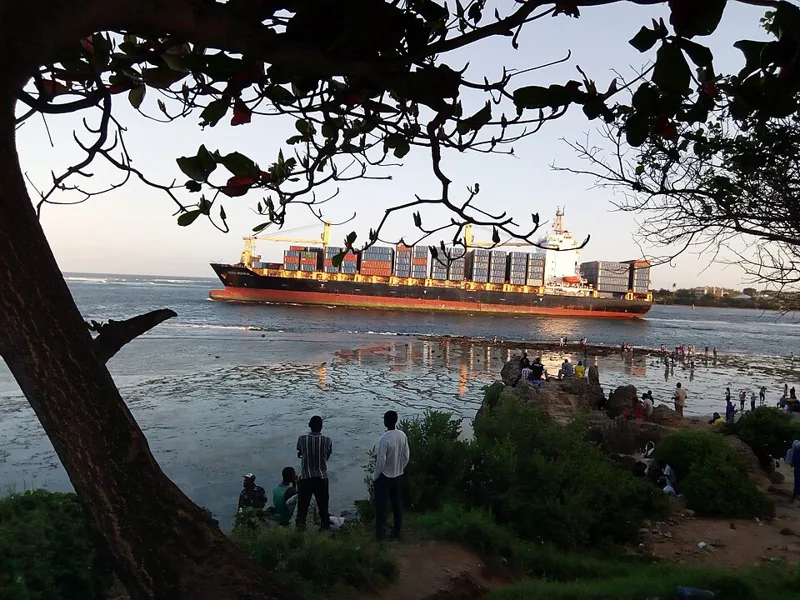
A European Union duty of 9.5% now applies to specified cold-rolled flat steel imports originating in India, bringing a direct trade barrier for exporters selling into a sizeable European manufacturing market. The rate covers named producer JSW Steel and, under the final schedule, other Indian-origin imports within the defined product category. It is not a blanket tariff on all Indian steel, nor an announcement about a future levy: the European Commission published its decision on 16 November and its regulation took effect the following day. The important question for exporters is which shipments qualify and how customers absorb the extra cost. 1 2 3
The measure follows an investigation opened on 18 September 2025 after European steel association EUROFER filed a complaint the previous month. The Commission concluded that investigated products from India, Japan, Taiwan, Türkiye and Vietnam had been dumped in the EU and injured domestic producers. The legal text is Commission Implementing Regulation (EU) 2026/2547, signed on 13 November and published in the Official Journal on 16 November. Article 1 sets product-specific exclusions and customs classifications; traders must check them rather than assume that every cold-rolled coil or downstream steel component is covered. 1 2 3 6
India's rate is distinctive for the regulator's reasoning. The Commission concluded that government measures affecting domestic iron ore pricing created what EU trade law calls a Particular Market Situation, making a straightforward comparison between Indian domestic prices and export prices inappropriate. It therefore used a constructed normal value in calculating dumping. This is the Commission's finding under its investigation, not an independently established claim that every Indian steelmaker bought artificially cheap ore. The distinction matters because the methodology could influence how future EU trade-defence complaints are assessed beyond this single steel product. 1 2 4
JSW Steel disputed that rationale during the investigation, according to the Commission's own record. It argued that establishing a market-wide distortion was insufficient without proving an effect on the company, and said its domestic iron ore purchases were comparable with import prices. The company also challenged the treatment of particular ore grades and the calculation method. Those arguments were considered but did not overturn the final measures. Reporting the dispute as a settled finding of corporate wrongdoing would go beyond the regulator's decision; the operative outcome is an import duty arising from a contested trade-defence calculation. 1 3 7
The scale deserves careful interpretation. Brussels puts the EU market for these cold-rolled flat products at about €23.2 billion and the value of relevant imports from India at €282 million. These are market and import-value measures, not a forecast of how much tariff revenue Brussels will collect or how much Indian producers will lose. The 9.5% duty is applied to the specified customs value at the EU frontier; changes in shipment volumes, product mix, pricing and contractual responsibility can alter the eventual cost. A simple multiplication of historical trade value by the new rate would therefore be only a static illustration, not a verified financial impact. 1 2 4
The five-country comparison also matters. The Commission set 27.9% for Japan, 16% for Vietnam, rates of 20.7% to 27% for Taiwan, and 3% to 7.8% for Türkiye. India's 9.5% sits below the Japanese, Vietnamese and Taiwanese rates but above the Turkish range. None of these comparisons alone establishes that Indian suppliers will gain European orders: different product specifications, customer qualifications, delivery schedules, exchange rates and existing contracts influence purchasing decisions. Europe's steel producers, meanwhile, have been seeking relief from import prices they argue undermine local production. 2 3 4
For Indian mills and European buyers, the immediate practical work is contractual and customs-related. Exporters need to map individual product codes and applicable exclusions, confirm the origin and producing entity shown on invoices, and determine whether prices are quoted before or after import duties. Buyers may try to renegotiate, switch suppliers or maintain existing supply arrangements. None of those responses is yet demonstrated by this regulation. The document also provides conditions for company-specific customs documentation, so a correct invoice is an implementation issue rather than a formality to overlook. 1 3 5 7
The ruling illustrates a difficult part of India-EU industrial trade: market access can change through product-level trade-defence investigations independently of broader diplomatic or commercial negotiations. The most useful next evidence will be revised European import volumes, actual changes in Indian steel export prices and any formally lodged legal challenge or administrative review. Until then, the defensible conclusion is narrow but consequential: a definitive duty is in force on a defined category, and the Commission's contested iron ore assessment was central to how that rate was reached. 1 2 3