
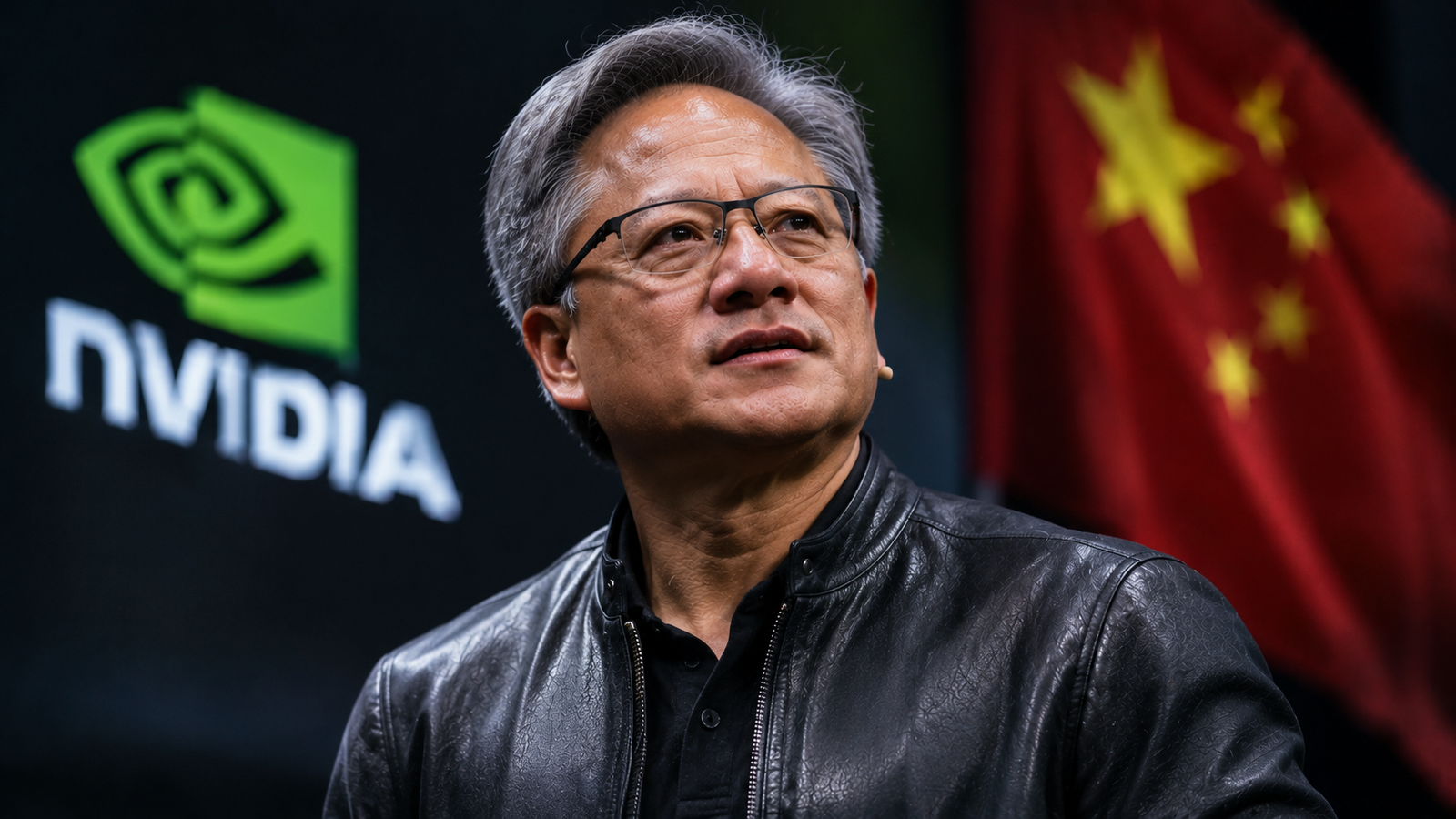
Jensen Huang has spent more than three decades building a company whose technology now sits at the centre of the global artificial-intelligence industry. On 8 November, the 63-year-old Nvidia chief executive found himself addressing a crisis of a different kind. In a message made public by the company, Huang acknowledged that he had been unfaithful to his wife, apologised to his family and colleagues, and promised to cooperate with an independent investigation into reports that he had been targeted by a foreign intelligence operation. The admission followed American media investigations alleging that a Chinese business executive with whom Huang had developed a close relationship had been recruited to gather information for Beijing. By the following day, the controversy had reached the White House, prompted calls for congressional scrutiny and wiped approximately $190 billion from Nvidia's market value. A shareholder lawsuit followed shortly after Wall Street closed. What began as an allegation about a personal relationship had become a question about the governance of one of the world's most strategically important companies. ¹ ²
The most serious allegation remains unproved in public. Investigations by The New York Times and Financial Times, drawing on accounts of American intelligence assessments, reported that Alice Huang, a Chinese businesswoman formerly associated with Singapore-based AI infrastructure company Megaspeed International, had been recruited by China's Ministry of State Security to gather information about Nvidia's chief executive. The reports described an intelligence warning circulated among senior American officials earlier in 2026, and raised the possibility that the relationship could have offered Beijing access to commercially or politically sensitive information. Alice Huang has not publicly responded to the allegations, while China has rejected the suggestion of an espionage operation as a smear. Nvidia says it currently has no reason to believe that either American national security or the company's secrets were compromised. There has been no publicly established finding that Jensen Huang knowingly assisted an intelligence service, disclosed protected information or changed Nvidia's commercial policies at Beijing's direction. ³ ⁴
That distinction is central to understanding the case. An acknowledged affair is not evidence of espionage, and the presence of someone suspected of intelligence connections does not establish that an intelligence operation succeeded. The expression honeytrap, which has appeared prominently in coverage of the controversy, describes a purported attempt to exploit intimacy to obtain information or influence. Whether such an operation occurred here, whether Alice Huang was acting under intelligence instructions, and whether any useful information was obtained remain matters for investigation. The allegations nevertheless have extraordinary consequences because of who Huang is, the company he controls and the strategic industry in which Nvidia operates.
The relationship at the centre of the investigation
Alice Huang is a Chinese citizen who has been identified in reporting as a former senior executive of Megaspeed International, a Singapore-based company providing computing infrastructure and services used by artificial-intelligence developers. Although she shares a surname with Jensen Huang, the two are not related. Megaspeed has been a substantial Nvidia customer and has attracted American regulatory scrutiny over suspicions that advanced chips purchased through intermediaries might have reached Chinese customers despite US export restrictions. Those suspicions have not, on the evidence publicly available for this article, established that every transaction involving Megaspeed was unlawful or that Alice Huang personally directed prohibited shipments. They are relevant because they place the reported relationship at the intersection of Nvidia's commercial operations and an existing national-security dispute about access to American semiconductor technology. ⁵
The chronology is significant. Initial reporting in late October raised questions about Huang's relationship with the executive and the concerns of American intelligence officials. On 5 November, Reuters reported that three senior Republican lawmakers had written to the Nvidia chief executive requesting a closed-door congressional briefing. On 6–7 November, additional reports described an intelligence memorandum alleging that Alice Huang had been recruited to collect information about him. Nvidia's board announced an independent inquiry on 8 November, the same day Huang publicly acknowledged his infidelity. On 9 November, the allegations dominated market coverage and prompted a proposed shareholder class action in federal court in San Jose. These developments represent an escalation in public and institutional scrutiny, but they do not constitute a completed intelligence investigation or a judicial determination of wrongdoing. ⁶ ⁷
Huang's own statement is unusually direct for the chief executive of a company of Nvidia's size. In a message dated 8 November and published through Nvidia's official newsroom, he wrote:
> “I was unfaithful to my wife. My actions hurt her and our children.”
He accepted responsibility for his personal conduct and acknowledged that it had damaged the trust placed in him by his family and company. He also said he would cooperate fully with the board's investigation and remained committed to Nvidia and American national security. The public message did not identify Alice Huang by name, provide a detailed account of the relationship or establish whether any protected information had been shared. Its primary significance is that Huang acknowledged infidelity while leaving the separate intelligence allegations to an independent investigation. ¹
Nvidia's directors chose their words carefully. In their official announcement, they said an independent board committee, assisted by outside counsel, would investigate the reports that Huang had been the target of a foreign intelligence effort. The statement also expressed confidence in the chief executive and made clear that the board had no current reason to believe either national security or Nvidia's proprietary information had been compromised. The decision creates two distinct institutional questions: whether the company exercised adequate safeguards around senior-executive relationships and sensitive information, and whether the board can reach a credible conclusion about the allegations without appearing to protect the person most closely associated with Nvidia's commercial success. ⁸
The company's earlier response offers an important defence. Nvidia told Reuters that Huang interacts with thousands of customer executives and that cloud-computing customers in Asia receive ordinary commercial information, not sensitive trade secrets or material connected to American national security. The company also said it acts on official warnings concerning companies or individuals that may present risks. That explanation is plausible in the context of Nvidia's international business: a chief executive overseeing a global technology supplier would routinely meet important customers, distributors and government officials. But the credibility of such safeguards depends on how they operate in practice, especially when a relationship extends beyond ordinary professional contact. The relevant evidence would include what information was accessible, whether warnings were received, what restrictions were imposed and whether any internal controls were bypassed. ⁹
Why Washington is concerned
Nvidia is not an ordinary multinational company whose leadership controversy can be assessed solely through the consequences for shareholders. Its advanced graphics processors and AI accelerators form a substantial part of the computing infrastructure used to train and operate sophisticated artificial-intelligence systems. American policy has increasingly treated access to advanced semiconductors as a question of economic and national security, particularly because powerful computing systems may have military and intelligence applications. Since 2022, Washington has implemented successive export restrictions designed to limit China's access to advanced American AI chips and related semiconductor technology. The rules have developed into an increasingly complex system covering product performance, end users, destinations and possible diversion through third countries. ¹⁰
Huang has been one of the most influential corporate voices arguing that broad restrictions on sales to China can damage American commercial interests and accelerate the development of competing Chinese technologies. His argument has an understandable business dimension. Nvidia has invested heavily in developing the hardware, software and developer relationships that make its products valuable, and access to large international markets can affect the returns on those investments. Critics of looser export controls, however, contend that advanced chips can expand China's military and intelligence computing capabilities, and that American companies should not be permitted to treat strategic technologies as ordinary exports. These are competing assessments of economic and security interests, not evidence that a particular policy position was the product of foreign manipulation.
The alleged intelligence operation is consequential precisely because those policy debates place Huang in contact with senior political officials. He has developed a close working relationship with President Donald Trump and has advocated changes to the administration's restrictions on chip sales to China. Public reporting has described meetings involving Huang and senior American officials during periods when export policy was being reconsidered. If an intelligence service were attempting to understand American AI strategy, the private assessments, professional relationships and political conversations of a chief executive in Huang's position could potentially be valuable. That possibility, however, must not be mistaken for proof that such information was obtained or that any subsequent policy decision was improperly influenced. Nvidia had independent commercial reasons to seek access to the Chinese market. ¹¹ ¹²
Congress is now demanding answers about the company's security arrangements. In a letter dated 4 November and publicised the following day, House Foreign Affairs Committee chairman Brian Mast, Select Committee on China chairman John Moolenaar and House Intelligence Committee chairman Rick Crawford asked Huang to attend a joint closed-door briefing on 18 November. They requested information about his interactions with Alice Huang and Nvidia's safeguards against foreign intelligence operations. The letter asked Huang to confirm the proposed date, or provide an alternative, by 11 November. Its language reflects the seriousness with which the lawmakers regard the allegations, but a congressional request for information should not be confused with a finding that the underlying allegations have been established. ⁶
The political response has extended beyond the Republican lawmakers who initially sought the briefing. House Democratic leader Hakeem Jeffries said on 9 November that Congress needed more information about the Nvidia situation and called for stronger restrictions on advanced chip exports to China. Several semiconductor-related proposals have been considered for inclusion in US defence legislation, including measures intended to strengthen congressional oversight, improve the tracking of advanced chips and coordinate restrictions on semiconductor manufacturing equipment with American allies. These initiatives existed before the scandal, and their prospects cannot be attributed solely to the allegations against Huang. But the controversy provides their supporters with a conspicuous example of the perceived vulnerabilities surrounding the country's most valuable AI technology supplier. ¹³ ¹⁴
Trump has publicly defended the Nvidia chief executive while acknowledging the seriousness of the reports. On 9 November, the president said he had spoken to Huang and asked whether he knew the woman had been identified as a possible spy. According to Trump's account, Huang replied that he had not known. Trump said he believed Huang, adding that the Federal Bureau of Investigation was looking into the matter. Those statements establish what Trump publicly reported about their conversation; they do not independently verify Huang's knowledge, establish the woman's intelligence status or determine the outcome of any federal inquiry. ¹²
Beijing has rejected the espionage narrative. At a 9 November press briefing, Chinese Foreign Ministry spokesperson Guo Jiakun referred reporters to earlier responses dismissing the accusations. Reuters reported his rejection of the account as a groundless smear. China has not publicly produced evidence demonstrating that every aspect of the American intelligence reporting is false, just as the publicly available record does not establish that Alice Huang carried out an intelligence assignment. Both the allegation and the denial must be understood in the context of a broader strategic rivalry in which technology companies have become instruments of national policy and subjects of intelligence concern. ¹⁵ ¹⁶
Nvidia's problem is bigger than the scandal
Investors have responded to the uncertainty with unusual force. Nvidia's shares closed down approximately 4.3% on 9 November, eliminating around $190 billion in market capitalisation over the session. The company's valuation, already sensitive to expectations about AI infrastructure spending and the sustainability of the industry's extraordinary expansion, now faces an additional source of risk that cannot be analysed through conventional sales forecasts. Shareholders must consider the possibility of prolonged investigations, changes in regulatory treatment, disruption to important commercial relationships and uncertainty about leadership. None of those outcomes is inevitable, but the market reaction demonstrates that the controversy is no longer being treated solely as a private matter. ²
The governance consequences became more concrete when shareholders filed a proposed class action in federal court in San Jose on 9 November, shortly after the American trading session ended. The complaint alleged that Nvidia and Huang had misled investors by failing to disclose the reported relationship and associated national-security risks. The plaintiffs, led by shareholder Mark Kistenmacher, sought unspecified damages. The allegations in the lawsuit have not been adjudicated. Establishing liability would require substantially more than showing that the relationship existed or that the share price subsequently fell. The plaintiffs would need to address the applicable securities-law requirements concerning disclosure, materiality, misleading statements and the claimed losses. The filing nevertheless shifts part of the controversy into a formal legal process in which the adequacy of corporate disclosures is itself under scrutiny. ²
The case also exposes Nvidia's dependence on a single individual. Huang co-founded the company in 1993 and has remained central to its strategy, technical identity and relationships with customers and governments. He is not simply a chief executive hired to manage an established institution. His reputation has become closely associated with Nvidia's transformation from a graphics-chip supplier into the dominant business in AI computing. Analysts have consequently described his potential departure as a substantial leadership risk, especially because his influence extends from product strategy to the company's negotiations with governments and major customers. That concentration of authority has contributed to Nvidia's success, but it also makes any sustained uncertainty surrounding Huang difficult for investors to disregard. ¹⁷
The reaction among prominent investors and technology executives has reflected this tension. Pershing Square founder Bill Ackman, in comments collected by Reuters, distinguished between an affair and a national-security compromise, arguing that the latter would present a far more serious problem. Mohamed El-Erian, the former chief executive of Pimco, highlighted the difficulty investors face in pricing leadership and governance risks at a company whose significance extends across technology markets and the wider economy. Sequoia partner Shaun Maguire offered a more openly supportive assessment of Huang's continued importance to American AI leadership, while Elon Musk publicly agreed with his sentiment. These reactions, reported from public statements and social-media commentary, are valuable as evidence of how influential market participants are interpreting the controversy. They do not establish the facts of the suspected intelligence operation or determine what Nvidia's directors should ultimately conclude. ¹⁸
Nvidia's directors now face a difficult institutional task. Their investigation must assess the evidence behind the intelligence allegations, determine whether relevant company policies were followed, and establish whether there were failures in internal reporting or the protection of sensitive information. They must also decide how much information can responsibly be disclosed while protecting legitimate confidentiality, privacy and any government investigation. An inquiry that is technically serious but communicates little may fail to restore market confidence; an inquiry that reaches conclusions before the evidence is complete could damage the board's credibility.
The immediate questions are therefore specific. What information did American authorities share with Nvidia, and when? Did the company undertake any risk assessment of Huang's interactions with Alice Huang or Megaspeed? Were there controls governing access to confidential product plans, customer information and discussions involving government policy? If the relationship extended beyond ordinary business contact, did the company have disclosure procedures capable of identifying that risk? And if no compromise occurred, can independent directors substantiate that conclusion with evidence rather than rely on assurances alone?
There is an equally important question for Washington. The American government has spent years attempting to limit China's access to strategic semiconductor technology through licensing requirements and export controls. Those measures address the movement of physical products and related technologies, but the allegations surrounding Huang illustrate why policymakers also worry about informal access to corporate decision-makers, strategic knowledge and political influence. Personal relationships may create opportunities for intelligence gathering, although the existence of an opportunity is not evidence that it was exploited. A credible security response must distinguish between actual compromise, theoretical exposure and ordinary commercial interaction with foreign customers.
The controversy arrives at a moment when the structure of the AI industry makes Nvidia unusually consequential. Its processors support computing systems used by companies, researchers and governments around the world. Any prolonged disruption to the company's leadership or commercial relationships could therefore have effects beyond Nvidia's own shareholders, including on technology suppliers, data-centre operators and businesses planning substantial AI infrastructure investment. That does not make Huang irreplaceable, nor does it establish that his departure would be inevitable or beneficial. It means the question of succession and institutional resilience deserves scrutiny independent of the allegations about his personal conduct.
For now, the public record contains an admission, a series of attributed intelligence allegations, a corporate investigation, congressional demands, a denial from Beijing and a shareholder lawsuit. It does not contain a completed finding that Alice Huang was acting as a Chinese intelligence agent or that Nvidia's secrets were compromised. Those boundaries matter because the reputational consequences of an accusation can arrive long before investigators establish its factual basis.
Nvidia's board has expressed confidence in the man who built the company, and Huang has promised to remain at its helm. Whether that confidence survives the investigation will depend on evidence that has not yet been made public. The scandal has exposed a central contradiction of Nvidia's extraordinary success: the company is a global institution whose products help define the technological capabilities of states, but its identity and strategic relationships remain unusually concentrated around one executive.
The question is not simply whether Jensen Huang can survive an allegation of a Chinese honeytrap. It is whether Nvidia has built an institution strong enough to withstand a crisis involving the man who made it indispensable.
---
Reporting note: This article is based on Nvidia's official statements dated 8 November 2026, the US House committee announcement of 5 November, publicly available Chinese Foreign Ministry statements, and reporting by Reuters, Associated Press and other identified news organisations through 10 November 2026. The underlying US intelligence memorandum, private communications, complete court pleadings and any investigative findings have not been independently examined by The Raisina Post. Allegations concerning Alice Huang, Megaspeed and a possible Chinese intelligence operation are attributed and are not presented as proven facts. Public market and social-media reactions are distinguished from evidence about the alleged conduct.