
Sixteen years before Sonia Gandhi published her own memoir, another book about her life became the subject of a bitter dispute. The author was a Spanish novelist, the book was a dramatized biography, and the objections came from prominent Congress figures while the party led India's national government. Its proposed Indian edition was delayed for years. On 10 November 2026, Gandhi's own account, Belonging: A Journey of Love, reached Indian readers following a disagreement with Penguin Random House India over proposed manuscript changes. The circumstances are different, but the underlying question has returned: who gets to decide which version of a political life reaches the public? 125
The two controversies should not be treated as identical. The Red Sari, written by Javier Moro, was an outsider's literary reconstruction of a living person's private thoughts and public career. Belonging is the recollection of the person who lived those events. In 2010, lawyers challenged allegedly inaccurate passages about Gandhi; in 2026, Gandhi's representatives resisted some changes sought by a publisher. Both episodes involved publishing decisions with political consequences. Neither supplies evidence of a formal government order banning the books. 135
The new memoir is being published in India by HarperCollins after negotiations with Penguin broke down. Penguin has denied outside political pressure, while Gandhi has said the publisher was uncomfortable with her criticism of the government. Their accounts remain in conflict. The manuscript drafts and correspondence necessary to establish the precise point of disagreement have not been made public. 457
In photographs: The first look at Belonging
Six images from the memoir's first presentation, before its 10 November release.
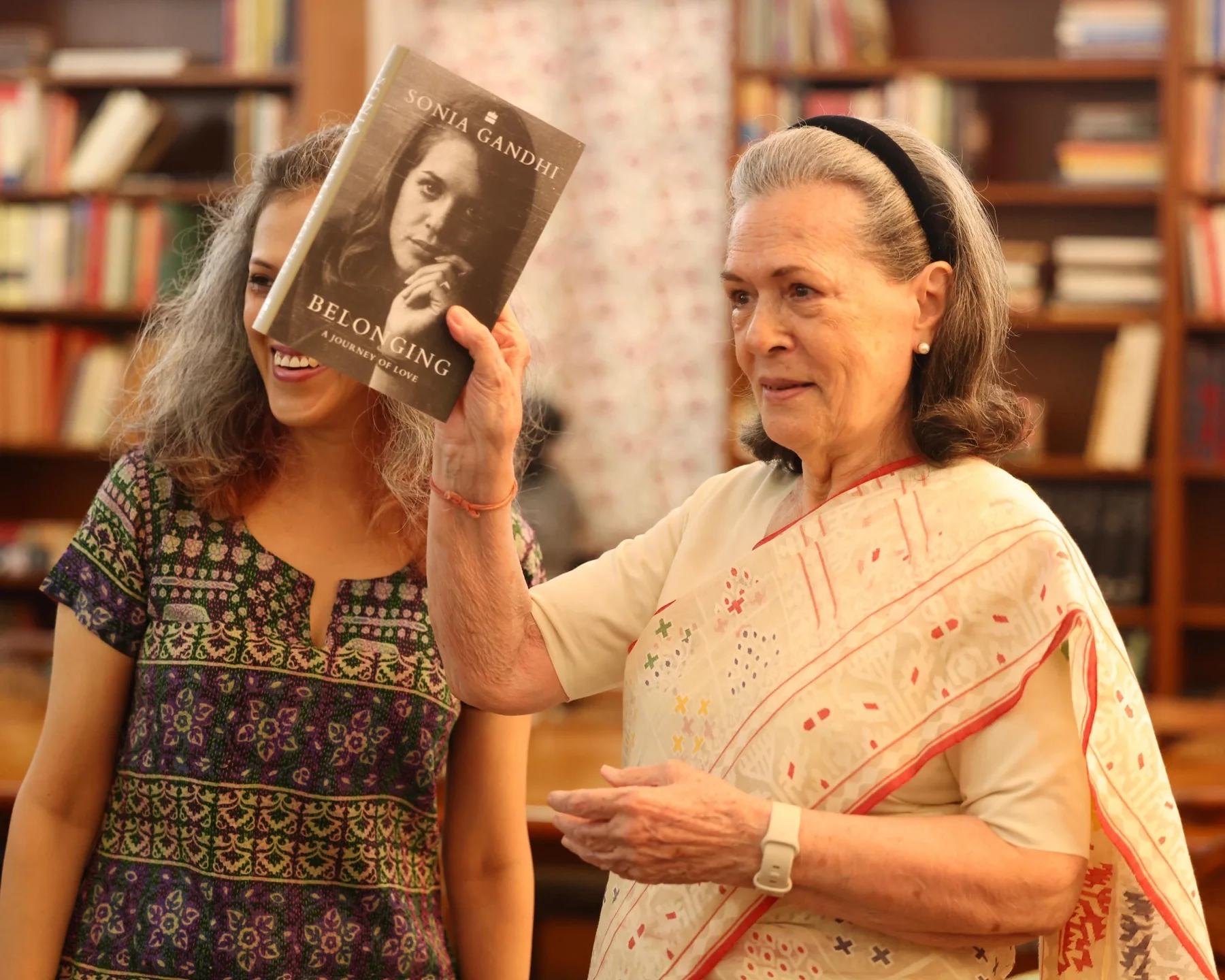
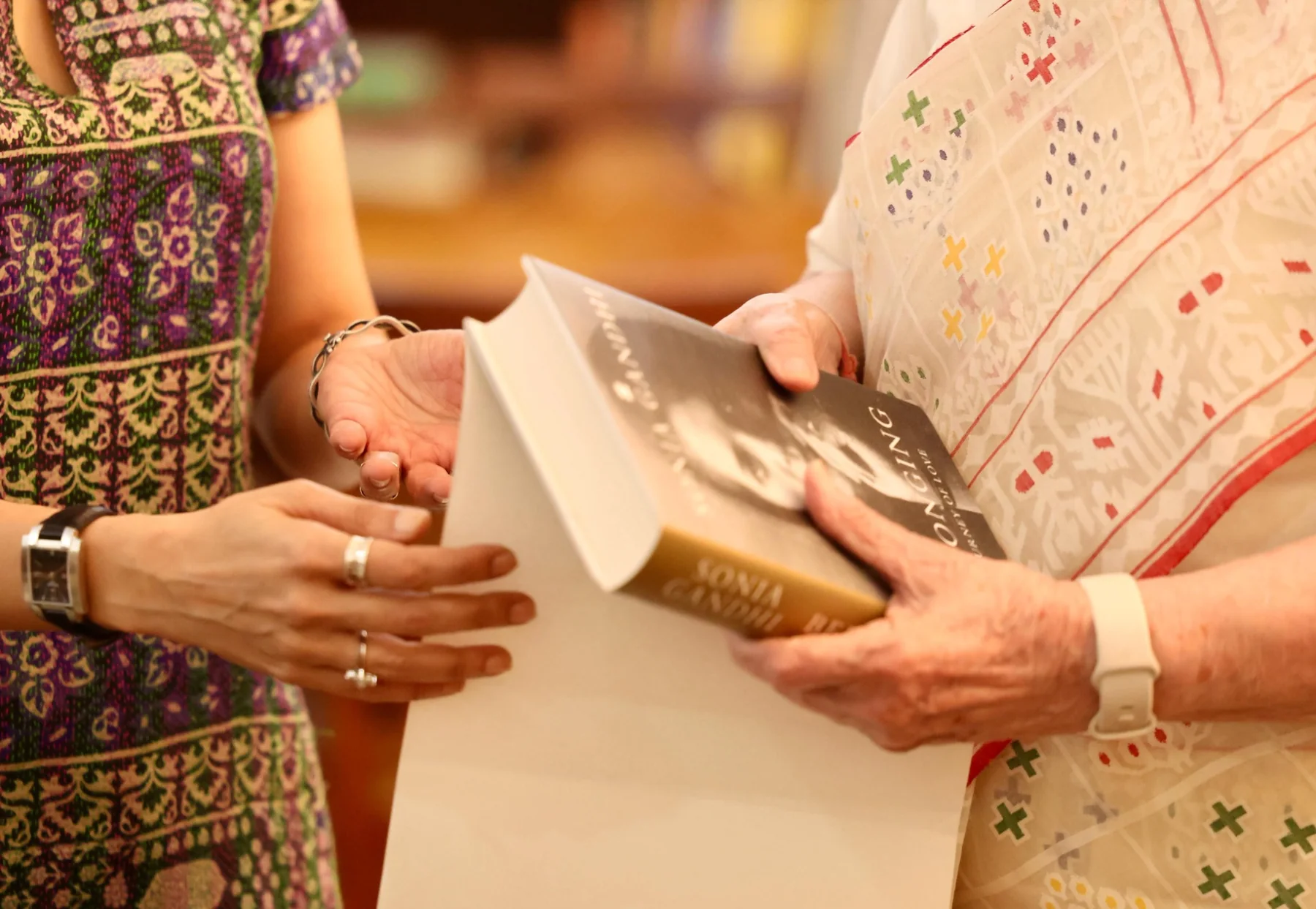
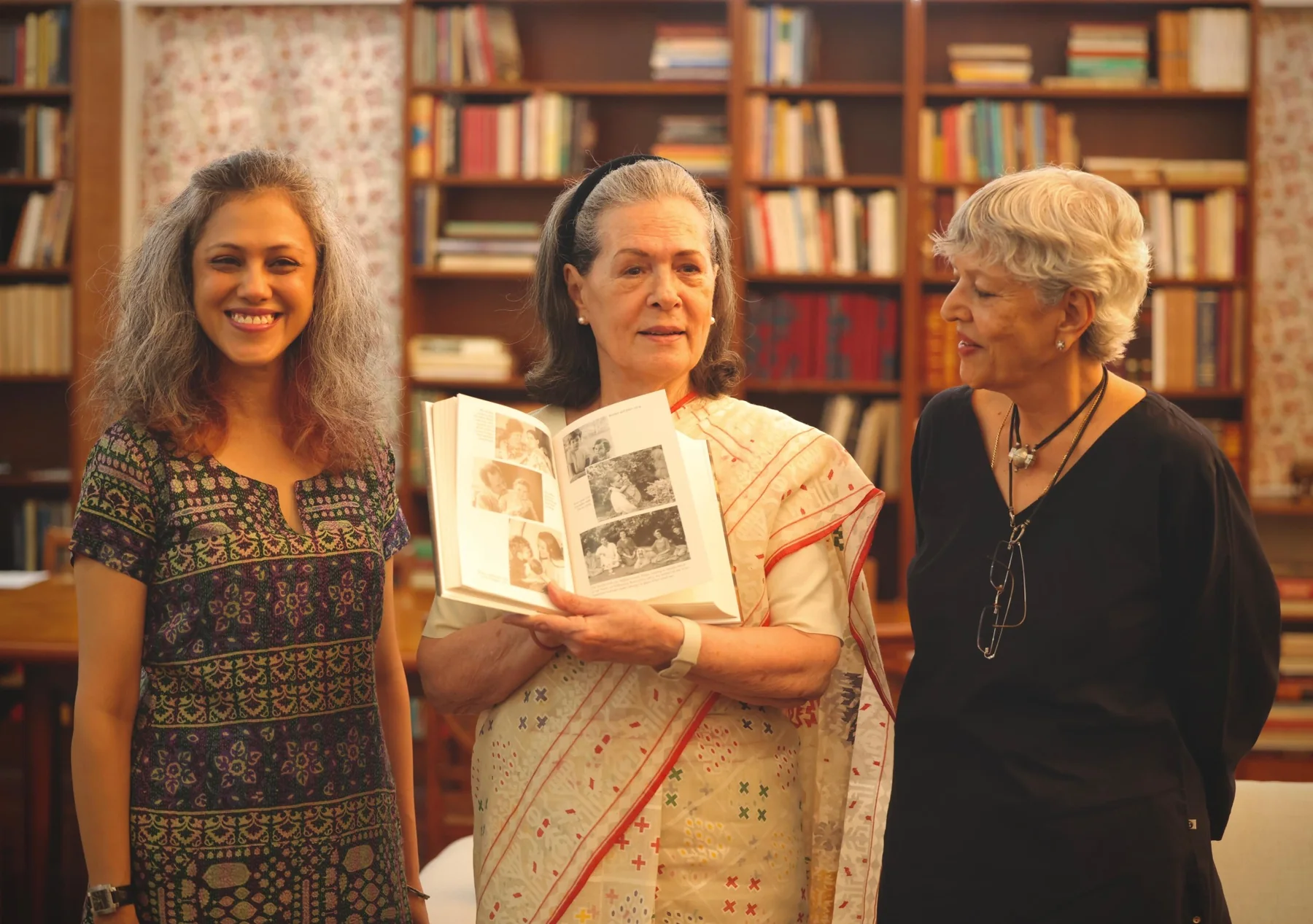
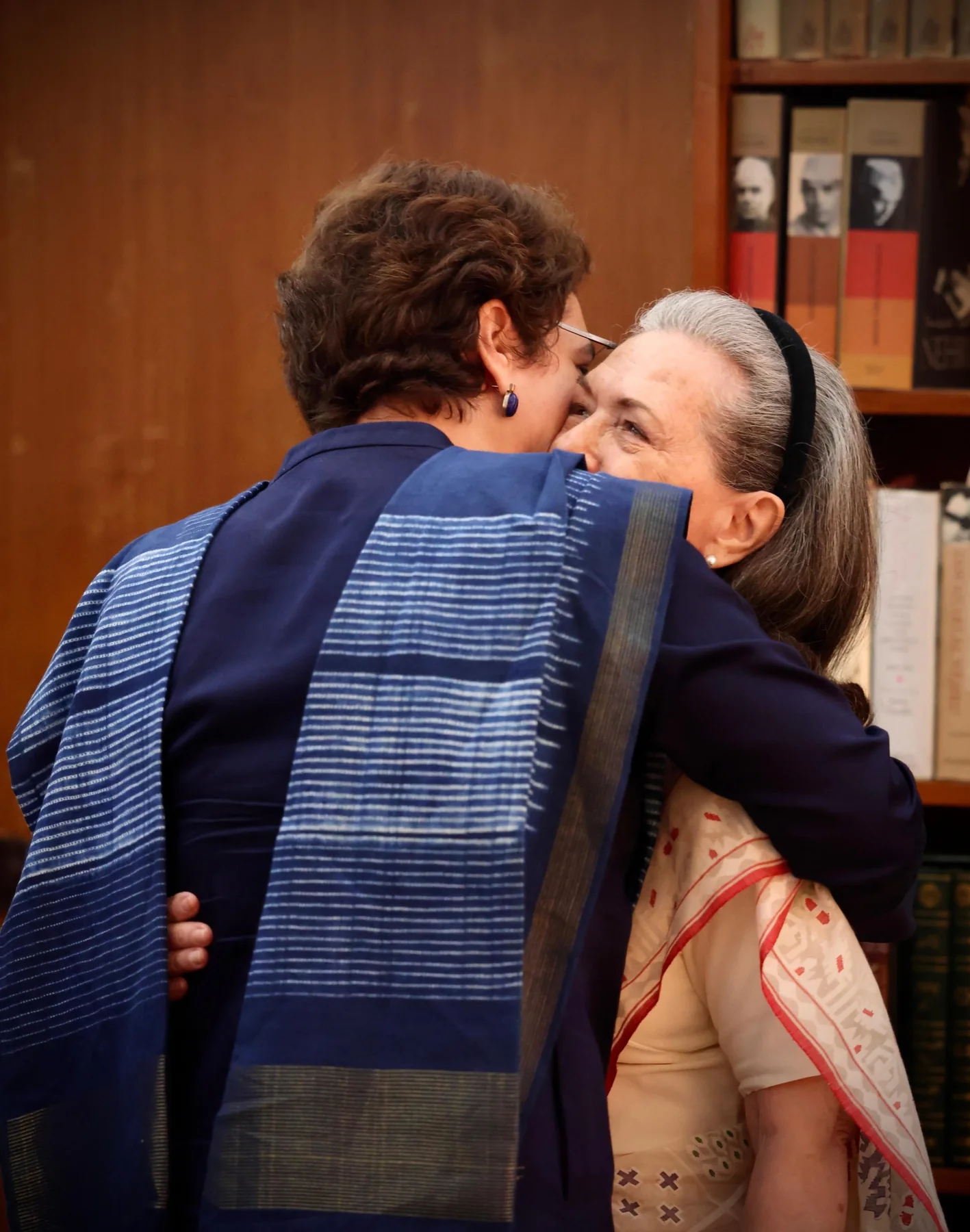
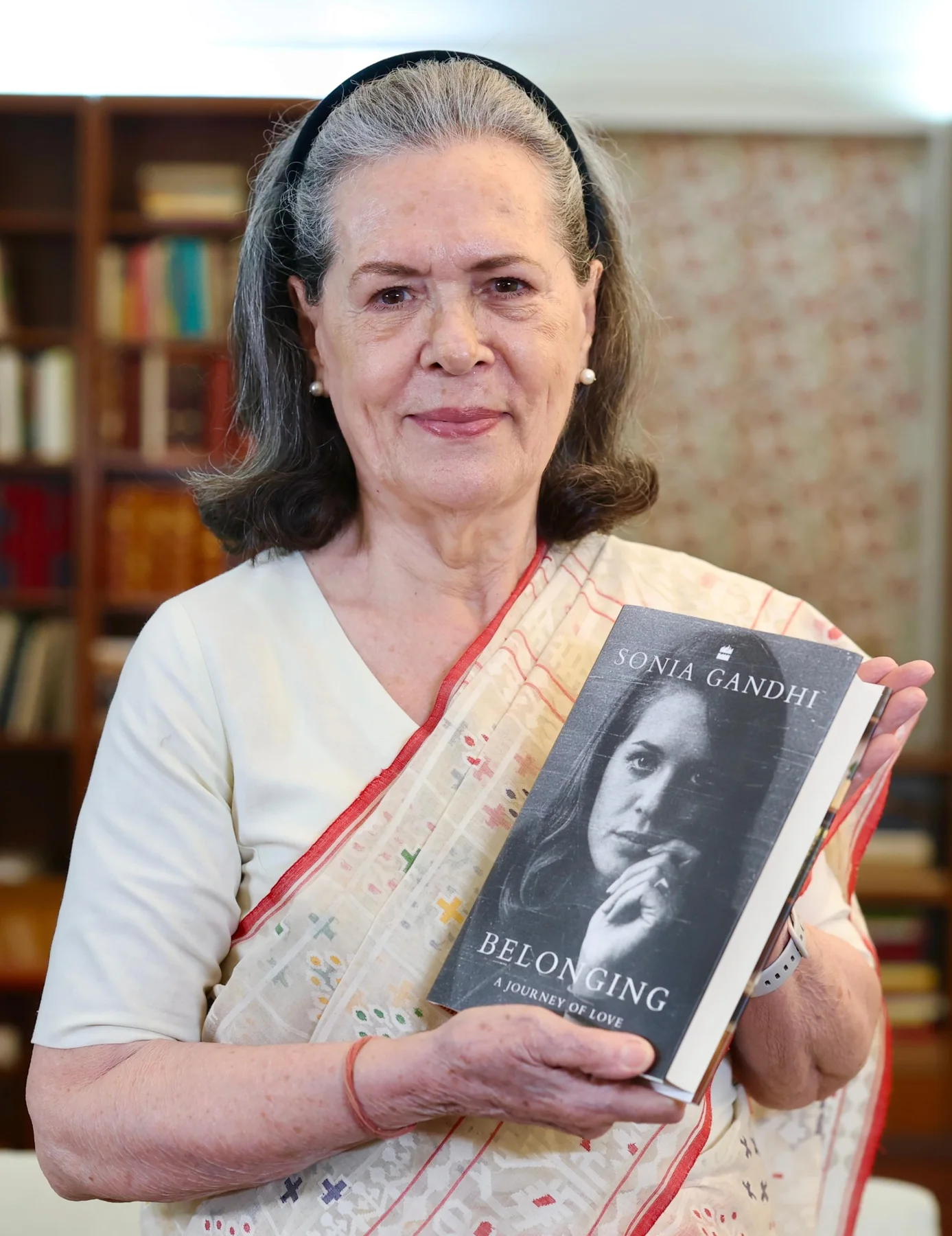
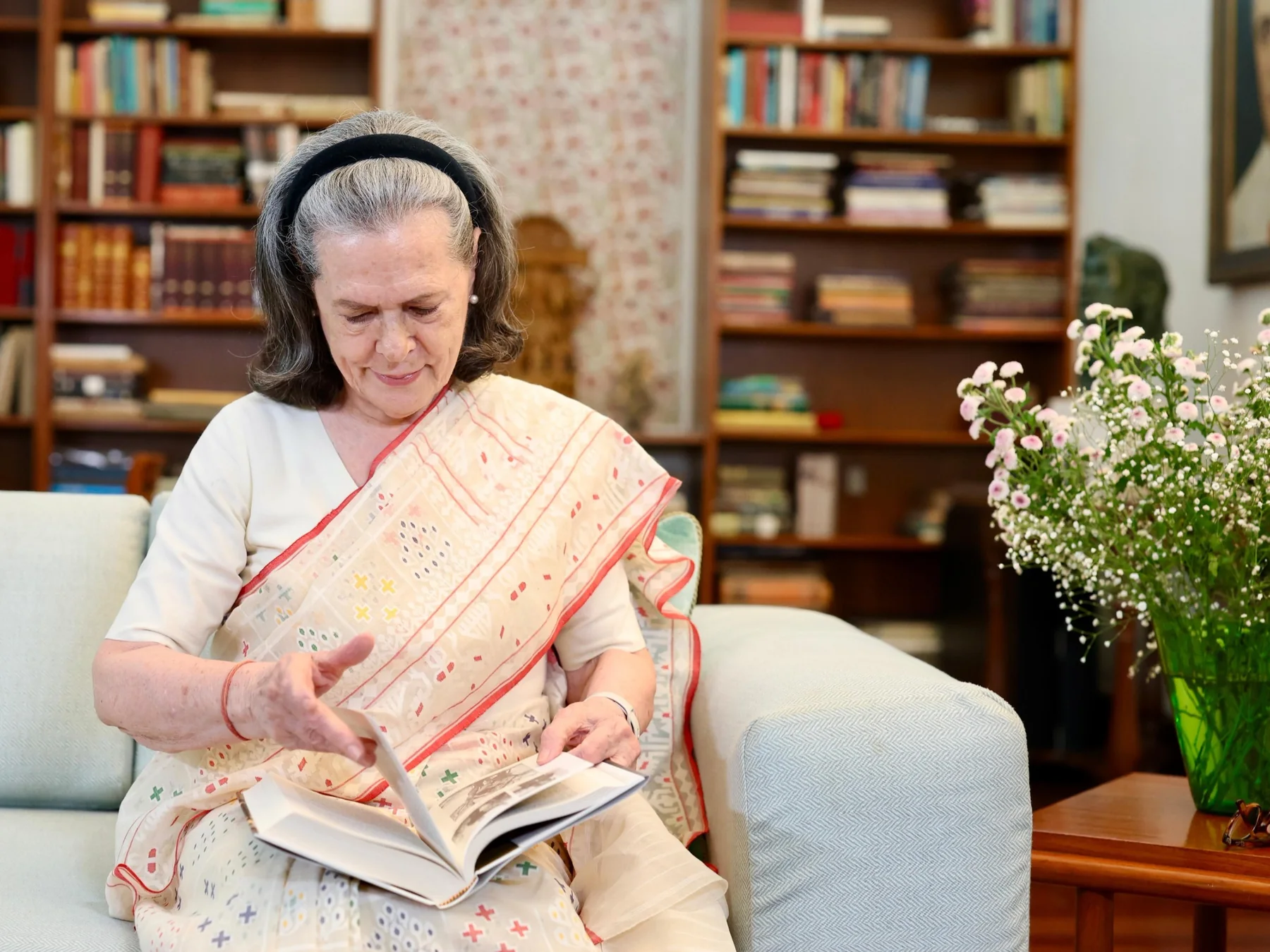
Photographs: Sonia Gandhi / Instagram. These images accompanied the book's earlier presentation and are not identified as photographs taken on publication day.
The Red Sari: A book India almost did not read
Javier Moro's El Sari Rojo appeared in Spain in 2008 and was subsequently translated. Its narrative followed Gandhi's childhood in Italy, marriage to Rajiv Gandhi and life within a family repeatedly altered by political assassination. Moro drew on historical material but used literary techniques, including reconstructed dialogue and accounts of private feelings he had not directly witnessed. A publisher could present such a work as literary biography, but the mixture of fact and invention inevitably raises questions about accuracy. 13
In June 2010, Congress spokesperson and lawyer Abhishek Manu Singhvi challenged the book on Gandhi's behalf. The objections concerned, among other passages, claims about her private state of mind after Rajiv Gandhi's assassination. Singhvi argued that describing the work as fictionalised did not justify what he regarded as inaccurate or defamatory material. Moro defended his research and said the legal response was intimidating publishers. His own description of the book as a novel-like treatment was an acknowledgement that it was not a verbatim historical record. 1
A subject has a legitimate interest in disputing fabricated dialogue or false factual claims. The difficulty arises when that interest is exercised by someone with considerable political influence. Congress was then in power at the Centre, and Gandhi was widely regarded as its most powerful political figure. A legal threat did not have to become a court order to alter the commercial calculation of a publisher. Yet evidence of a threatened lawsuit is still not the same as evidence of a government ban. 12
The Indian edition did not appear in 2010. Roli Books eventually published it in January 2015, after the change of government. Publisher Pramod Kapoor told The Indian Express that there had been no official ban; the Spanish rights-holder Planeta had advised against proceeding in the prevailing circumstances. Moro gave a partly different account, saying his preferred international publishing sequence had also affected the timing. He nevertheless acknowledged that legal threats had discouraged prospective English-language publishers. Neither account establishes a single uncontested reason for the delay, but both place the legal controversy within the publication history. 2
Calling The Red Sari a book prohibited by the Indian government would therefore overstate the record. Describing its delayed publication as an ordinary scheduling matter would leave out the objections and apprehension documented at the time. The episode illustrates how publication can be inhibited by anticipated risk without a formal act of censorship. It also shows why an author's freedom and a living subject's right to challenge accuracy require careful separation.
Sixteen years later, the dispute changes sides
In August 2026, The Indian Express reported that Penguin Random House India would not publish Belonging after exchanges about proposed editorial changes and deletions. Subsequent reporting identified passages concerning Prime Minister Narendra Modi, the RSS, the India–China border and the treatment of minorities as areas of disagreement. The account was based on people familiar with negotiations, not on publication of the full annotated manuscript. 46
The author's representatives reportedly feared that accepting extensive changes would produce substantially different Indian and foreign editions. Readers buying Gandhi's memoir in India could encounter a text that omitted passages present in books published abroad. Such divergence would be consequential for an autobiography whose stated purpose is to present the author's own account of her experiences and political judgements. But publishers in different territories can also make distinct legal and editorial assessments; a variation between editions is not, by itself, proof of political pressure. 411
Penguin disputed the suggestion that it had abandoned the book simply because Gandhi rejected editorial recommendations. It described checking facts and recommending amendments as part of its professional responsibility. The publisher said it had been keen to publish, that both parties had accepted some points and rejected others, and that one unresolved issue brought negotiations to an impasse. According to Penguin, the author's team then decided not to proceed. The company denied outside pressure and declined to identify the final issue, citing confidentiality. 56
Gandhi's own account is different. In an interview with The Guardian on 7 November, she said Penguin was uneasy about her criticism of the government. That statement is important direct testimony about her understanding of the dispute, but it cannot by itself settle the publisher's motives. No independently available file of manuscript revisions, lawyer comments or correspondence has established whether the final disagreement concerned a contested fact, a legal risk, an author's opinion or something else. 712
HarperCollins India announced on 4 September that it would publish Belonging on 10 November. William Collins handled the British edition, while Alfred A. Knopf, part of Penguin Random House, handled the American edition. The international corporate structure makes the divergence in publishing decisions worth examining, but not conclusive. Contracts, editorial teams and legal exposure may differ between national markets. 511
Where editorial scrutiny ends and censorship begins
A publisher has a duty to question factual assertions, especially when a memoir makes allegations about named institutions or living people. A manuscript written by a political leader is not immune from verification. Equally, an author may reasonably reject changes that distort the argument or remove a political opinion simply because it is controversial. Neither party must always agree, and a failed negotiation is not automatically censorship.
Congress leaders accused Penguin of yielding to political pressure over criticism of the BJP government. BJP figures disputed that allegation and questioned why a disagreement with a private publisher had been made into a political controversy. Both responses are part of the story; neither establishes what happened behind closed doors. The public record documents a publishing impasse, competing explanations and a subsequent deal with another publisher. It does not document an instruction from the Indian government to remove a specific passage. 56
A reasonable test would ask exactly what change was requested and why. Was a factual allegation unsupported? Did the publisher seek a correction, a right of reply or a clearer distinction between personal belief and demonstrable fact? Or did it seek to suppress criticism despite the author's willingness to substantiate the passage? The answers require the original wording and the editorial rationale. Without those materials, calling the event either straightforward censorship or wholly ordinary editing would go beyond the evidence.
There is also an economic dimension to publishing freedom. Legal defence, uncertainty about distribution and the reputational consequences of a disputed book can all influence commercial decisions. A formal ban is only one mechanism through which a text may fail to reach readers. At the same time, commercial caution is not necessarily evidence of an external command. A serious investigation should identify the mechanism rather than replace it with a slogan.
The political irony that deserves scrutiny
In the earlier dispute, a powerful governing party defended its leader against a third party's version of her life. In the later dispute, that same leader, now writing from the opposition, defended her own version against changes suggested by a publisher. This reversal does not make the cases equivalent: a fictionalised biography is different from a first-person memoir. It does, however, make consistency essential. Political leaders cannot insist on freedom of expression only when they are writing, or on complete control of historical narratives only when somebody else is writing about them. 135
The same rule should apply to every political tradition. People in public life may dispute demonstrably false claims and seek redress through lawful procedures. They should not be able to exercise exclusive authority over how their careers are remembered. Publishers should take legitimate legal risks seriously without treating political sensitivities as grounds for suppressing defensible reporting. Readers ultimately benefit from access to multiple accounts rather than a single authorised narrative.
Other publishing controversies show why the language used matters. In 2014, Penguin agreed to withdraw and pulp remaining Indian copies of Wendy Doniger's The Hindus following a legal settlement. That was a different mechanism from a manuscript negotiation or a threatened defamation action. Lumping every episode together as a ban obscures how publishing decisions are made and makes it harder to identify remedies.
What publication resolves, and what it does not
Belonging can now be judged by its readers. The book recounts Gandhi's life in post-war Italy, her relationship with Rajiv Gandhi, the assassinations that reshaped her family and her subsequent political career. It also offers her account of Congress's years in power and her assessment of contemporary India. First-person testimony is valuable when the author was present at important events, but the testimony remains a perspective requiring comparison with records and other accounts. 7811
A release-day report in The Indian Express examines passages concerning Modi and the book's broader political critique. The existence of those passages in the published edition does not prove which exact words Penguin earlier asked to change or why. Only a reliable comparison with the confidential working text could answer that question. The publication has resolved the practical problem of obtaining an Indian edition; it has not settled the argument over the editorial process. 8
Gandhi's public presentation of the memoir has been unusually personal. In October, she joined Instagram to show the first copies, share photographs and speak about why she had decided to record her own experiences. The photographs accompanying this investigation come from that first-look material, rather than the publication-day bookstore release. They show the author with a finished book, not the undisclosed negotiations that preceded it. 91014
The Raisina Post will examine the completed memoir separately in a book review. That assessment should consider what Gandhi reveals, what she omits and how her recollections compare with independent historical evidence. The present article asks a different question: what does the troubled publication history of two books, sixteen years apart, reveal about the struggle over political reputation and the institutions that decide what reaches the public?
The right to tell a political story cannot belong exclusively to its subject, its critics or its publisher. Editorial independence is tested when each can defend its decisions through evidence and consistent standards, rather than by appealing to the preferences of those in power.
Reporting note: This investigation synthesises published documentary reporting, public publisher statements and Sonia Gandhi's account in interview. The Raisina Post has not seen confidential manuscript drafts or correspondence, independently established government interference, or reviewed the complete memoir for literary criticism. The supplied photographs are credited to Sonia Gandhi's Instagram account.